




In summary: Cala dels Testos is a small pebble cove in El Poble Nou de Benitatxell (Alicante), at the foot of Morro Falquí – a cliff over 100 metres high – and at the mouth of the Barranc de l’Infern. There is no road access: it can be reached by sea, by kayak or stand-up paddleboard, or on foot via a ravine route with sections secured by ropes – a dangerous route suitable only for experienced people. There have been several rescues, the most recent in August 2026.
Few coves on the Costa Blanca are as famous and as uncrowded as Cala dels Testos. Its seclusion is precisely what makes it special: crystal-clear water, towering rock faces and not a single building in sight. But that seclusion is also its risk. In this guide, we’ll tell you what it’s like, the safest way to get there and what to bear in mind before you go.
Index
What is Cala dels Testos like?
-
Cove details
Cala dels Testos
- Location
- Poble Nou de Benitatxell (Alicante)
- Environment
- At the foot of Morro Falquí, next to Cala Moraig
- Area
- Gravel and stones
- Water
- Very clear
- Access by road
- No
- Recommended access
- By sea, by kayak or on a stand-up paddleboard
- Access on foot
- Rope-assisted canyoning route, dangerous
- Services
- None
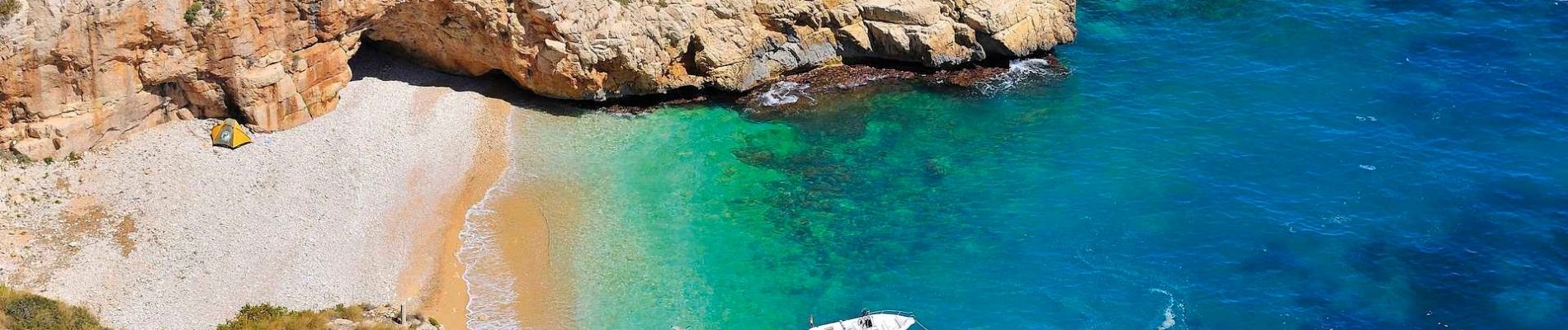
It is a tiny pebble cove, formed where the Barranc de l’Infern meets the sea, enclosed by vertical limestone cliffs. Next to it stands Morro Falquí, a promontory rising more than 100 metres above sea level. The water is clear and turquoise and, as there are no easy access points, it is almost always very quiet.
How to get to Cala dels Testos
By sea: the recommended option
The safest and most pleasant way to get there is by kayak or stand-up paddleboard, setting off from Cala Moraig or other nearby coves and skirting the coast. If you’re inexperienced, go on a guided tour. Before setting off, check the sea conditions and tide times, and make sure you allow plenty of time for the return journey: in August 2026, a group of eight people, including children, became stranded in the cove as the tide came in and had to be rescued by land at night.
On foot: for experienced walkers only
To get there by land, you descend the Barranc de l’Infern via the so-called ‘Ruta dels Testos’, which has sections with ropes on very slippery limestone. It is not suitable for people who suffer from vertigo, those with no canyoning experience, those without suitable footwear, or those with children. In recent years, there have been falls and rescues, some involving helicopters. If you’re not sure you can manage it, don’t attempt it.
Things to do at Cala dels Testos
- Snorkelling: The rocky seabed and clear water make it one of the best coves in the area for snorkelling.
- Kayaking route: combine it with Cala Moraig and Cova dels Arcs on the same outing.
- Switch off: It is one of the few coves on the Costa Blanca where you can be almost completely alone, even in summer.
Excursions and activities near Cala dels Testos
These kayaking trips take you around the coves and caves along the coast between Moraira, Benitatxell and Jávea: And if you’d like to see all the options, here they are: activities in Moraira.
Tips for your visit
- Come by sea if you can: it’s the safest way.
- Check the sea conditions and tide times before setting out, and make sure you return whilst there is still daylight.
- Do not go down the ravine if you are inexperienced, do not have suitable footwear, or are with children.
- Keep your mobile phone charged in a waterproof case.
- There is no shade or facilities: water and sun protection.
- This is a very fragile natural environment: please do not leave any rubbish behind.
More coves in Benitatxell and Jávea
 Discovering Moraig cove, the treasure of Benitachell
- Where to park in Playa Granadella
- Cala el Pom, the least frequented beach on the coast of Jávea
- Cala Blanca in Jávea, discover it



Frequently asked questions
Where is Cala dels Testos?
In El Poble Nou de Benitatxell (Alicante), next to Cala Moraig, at the foot of Morro Falquí and at the mouth of the Barranc de l’Infern.
How do you get to Cala dels Testos?
The best way to get there is by sea, by kayak or stand-up paddleboard from nearby coves such as La Moraig. On foot, you have to descend a ravine using sections of rope, which is only suitable for experienced people.
Is it dangerous to walk there?
Yes. There are sections involving abseiling on slippery rock, and there have been falls and rescues. It is not suitable for people who suffer from vertigo, those with no experience, or those with children.
Are there any facilities at Cala dels Testos?
No. It’s an unspoilt cove with no lifeguard, no toilets and no beach bar.
What do you need to bear in mind if you’re going kayaking?
Check the sea conditions and tide times, set off in good time so you can return before dark, and keep your mobile phone in a waterproof case. In August 2026, a group became stranded when the tide came in.
