
In summary: The island of Benidorm is officially known by that name, or L’Illa in Valencian, but it is also known as the Journalists’ Island: On 26 May 1970, it was adopted by Spanish journalists. It used to be known as Isla de los Pavos Reales. It lies some 3.5 km off the coast, forms part of the Serra Gelada Natural Park and can be reached by boat from the port of Benidorm.
It is Benidorm’s most recognisable landmark: a triangular rock that juts out in front of the Levante and Poniente beaches and features in almost every photo of the town. Many visitors wonder what it’s called and whether it’s open to the public. Here’s its history, the legend behind its shape and how to get there.
Index
What is the name of the island of Benidorm?
Its official name is simply Benidorm Island, and in Benidorm everyone calls her L’Illa, «the island» in Valencian. Throughout its history, it has had two other names:
- Journalists’ Island: the most unusual name, which it was given in 1970 and is still used today.
- Peacock Island (Illa dels Paons): an old name, dating back to when there were peacocks on the island. Today, there are none left.
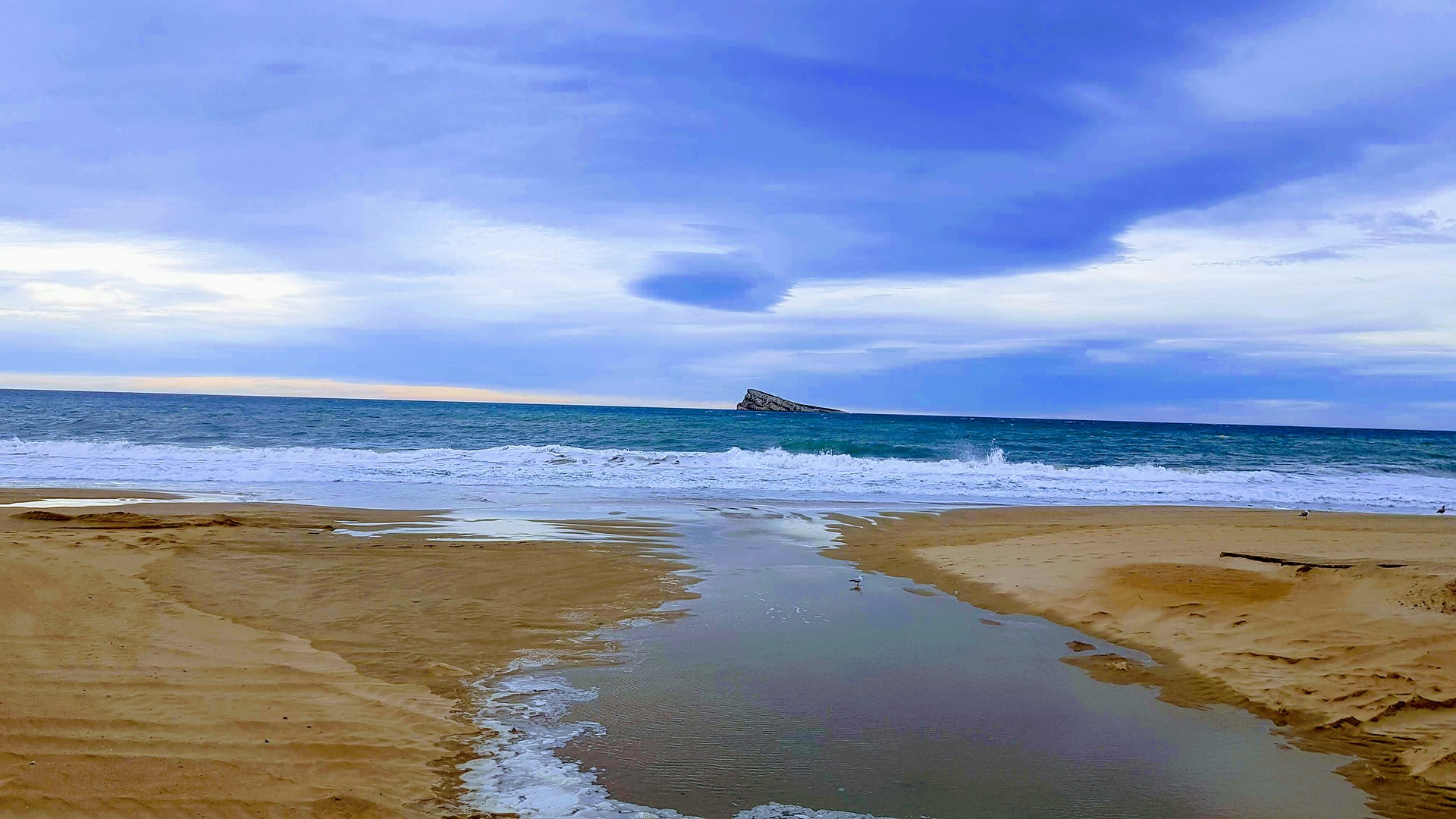
Why is it called Journalists’ Island?
On 26 May 1970, during the general meeting of the National Federation of Spanish Press Associations held in Alicante, 88 journalists from across Spain travelled to Benidorm for a very special event: sponsor the island. The proposal came from the then mayor, Jaime Barceló. The federation acted as the patron, and all Spanish journalists as sponsors. The parchment signed on that day is kept by the Association of Journalists of the Province of Alicante.
The Legend of Puig Campana
If you look inland from Poniente beach, you’ll see Puig Campana, the great mountain that towers over Benidorm, with a notch at its summit. Legend has it that an enraged giant kicked off that chunk of rock and that the piece fell into the sea, becoming the island. Take a look at the shape of the two and you’ll understand why the story has survived to this day.
What is the island of Benidorm like?
-
Island profile
Benidorm Island (L’Illa)
- Other names
- Journalists’ Island, Peacocks’ Island
- Distance
- About 3.5 km off the coast of Benidorm
- Form
- Triangular, with cliffs overlooking the sea
- Protection
- Serra Gelada Natural Park and its coastal surroundings
- Access
- By boat from the port of Benidorm
- Services
- Pier and bar-restaurant
The island is a rocky outcrop with cliffs on the side facing the open sea and a lower-lying area next to the jetty, which is where the boats moor. As it lies within the Serra Gelada Natural Park, it is a haven for seabirds and its seabed is protected, making it one of the best diving and snorkelling spots on the Costa Blanca.
How to get to the island of Benidorm
The most common form is the boat from the port of Benidorm, between the Levante and Poniente beaches. During the high season, there are frequent departures throughout the day; the crossing is short and some boats have a glass-bottomed deck so you can see the seabed during the journey. Check the return timetables before boarding, especially outside the summer months.
Another, livelier option is to head to jet ski with a guided excursion from Altea or La Vila Joiosa, which usually includes a stop to view the island and the Serra Gelada from the sea.
Things to do on the island of Benidorm
- Exploring the island: From here, you can enjoy one of the best views of the Benidorm skyline, the Serra Gelada and the Puig Campana.
- Seabird watching: The island is a haven for seagulls and other coastal birds.
- Swimming by the jetty: The water is very clear, but the access is rocky: make sure you wear water shoes.
- Snorkelling and diving: Its protected seabed is teeming with life; it is one of the best-known dive sites in the province.
- Eating or having a drink: at the island’s bar-restaurant, overlooking the town.
Trips and activities near the island of Benidorm
If you’d prefer to see it from the sea on an organised excursion, these trips take you around the island and the Serra Gelada: And if you’d like to see all the options, here they are: things to do in Benidorm.
Tips for your visit
- Check the departure time of the last return boat before boarding.
- Wear water shoes: you’ll be swimming from the rocks.
- Water, a cap and sun cream: there’s hardly any shade on the island.
- If you fancy a spot of snorkelling, bring your goggles and snorkel; the water is crystal-clear.
- When there is a strong easterly wind, the sea gets rough and some trips may be cancelled.
- This is a protected area: please do not take anything away and do not leave any rubbish behind.
More coves near Benidorm
 Cala del Tío Ximo, Benidorm
- Cala del Mal Pas, Benidorm
- La Cala de la Mina, the cove with crystalline waters in Alfaz del Pi
- La cala fonda in Villajoyosa


Frequently asked questions
What is the name of the island of Benidorm?
Officially, it is known as Benidorm Island, or L’Illa in Valencian. Since 1970, it has also been known as Journalists’ Island, and it used to be called Peacock Island.
Why is it called Journalists’ Island?
Because on 26 May 1970, during the general meeting of the Federation of Spanish Press Associations held in Alicante, the island was adopted by Spanish journalists at a ceremony proposed by the then mayor of Benidorm, Jaime Barceló.
How do I get to Benidorm Island?
By boat from the port of Benidorm, with frequent departures during the season. There are also jet-ski excursions from Altea or La Vila Joiosa.
How far is the island from the coast?
About 3.5 kilometres off the coast of Benidorm, opposite Levante and Poniente beaches.
What is there to do on the island of Benidorm?
Take a stroll and enjoy the views of Benidorm, watch seabirds, go for a swim by the jetty, go snorkelling or diving in the waters around the island, and have a meal at the island’s bar-restaurant.
