


In summary: The natural pools and swimming spots in the Canary Islands are part of the open sea, even though they may appear sheltered. Here are the best-known ones by island and municipality, along with the basic safety rules: check the sea conditions and never go swimming if there is a warning in place or the pool is closed.
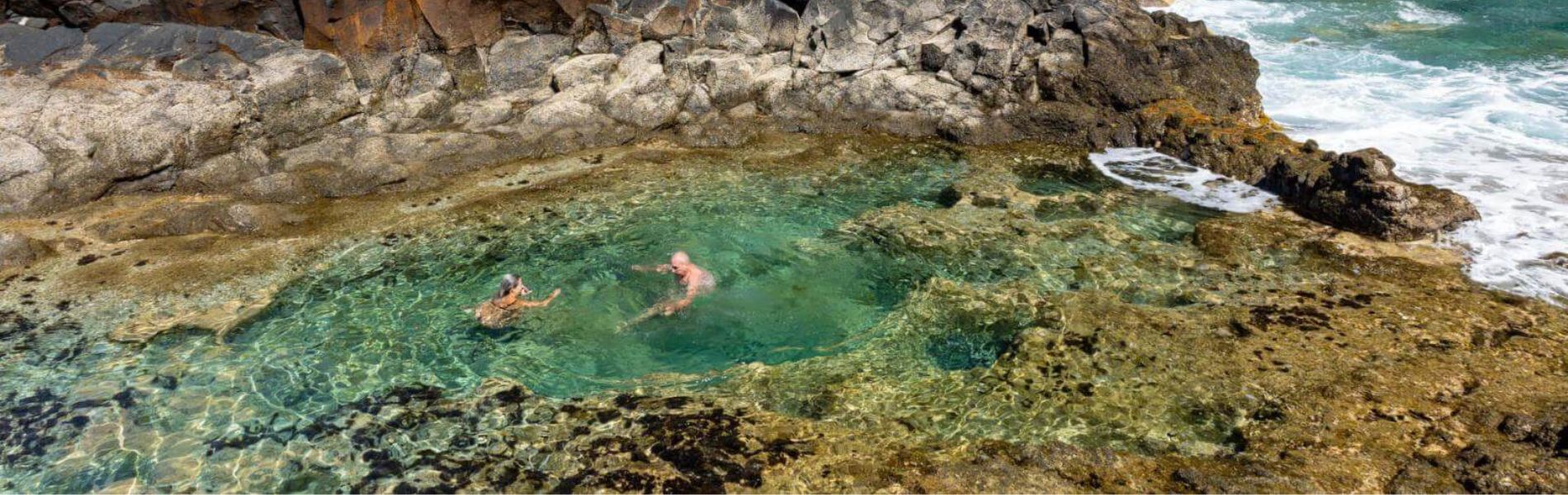
The volcanic coastlines of the Canary Islands feature rock pools into which the sea flows at high tide. Some have walkways, showers and lifeguards in the summer; others are completely natural. This list shows the island and municipality of each one.
Index
The best-known pools, island by island
La Palma
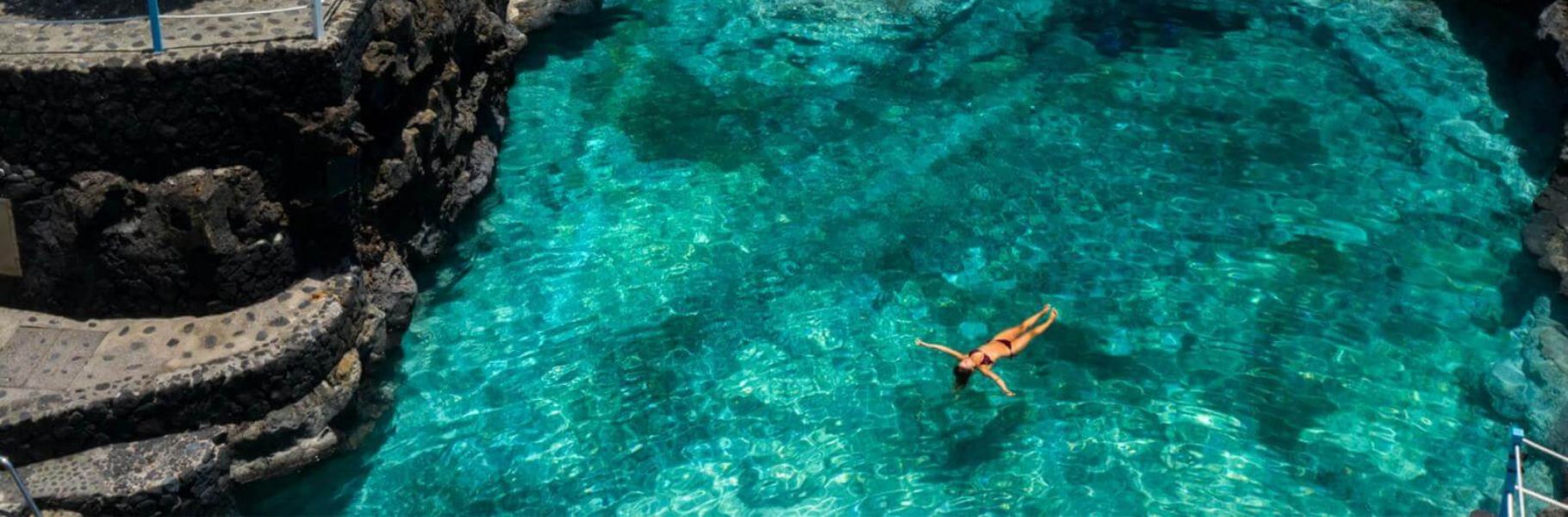
- Blue Puddle (San Andrés y Sauces): showers, changing rooms, toilets, car park, children’s pool and lifeguards on duty in summer only. Best at medium tide.
- La Fajana (Windward).
El Hierro
- Blue Puddle (Frontera, El Golfo): walkways, sun terrace and car park, unstaffed.
- The Flowerpot (Border).
- Pozo de las Calcosas (Valverde).
Tenerife
- Charco del Viento (La Guancha, a neighbourhood in Santa Catalina).
- La Laja Pond (San Juan de la Rambla): with strong waves; in 2020, swimming was banned once the lifeguard service had ended.
- El Caletón (Garachico).
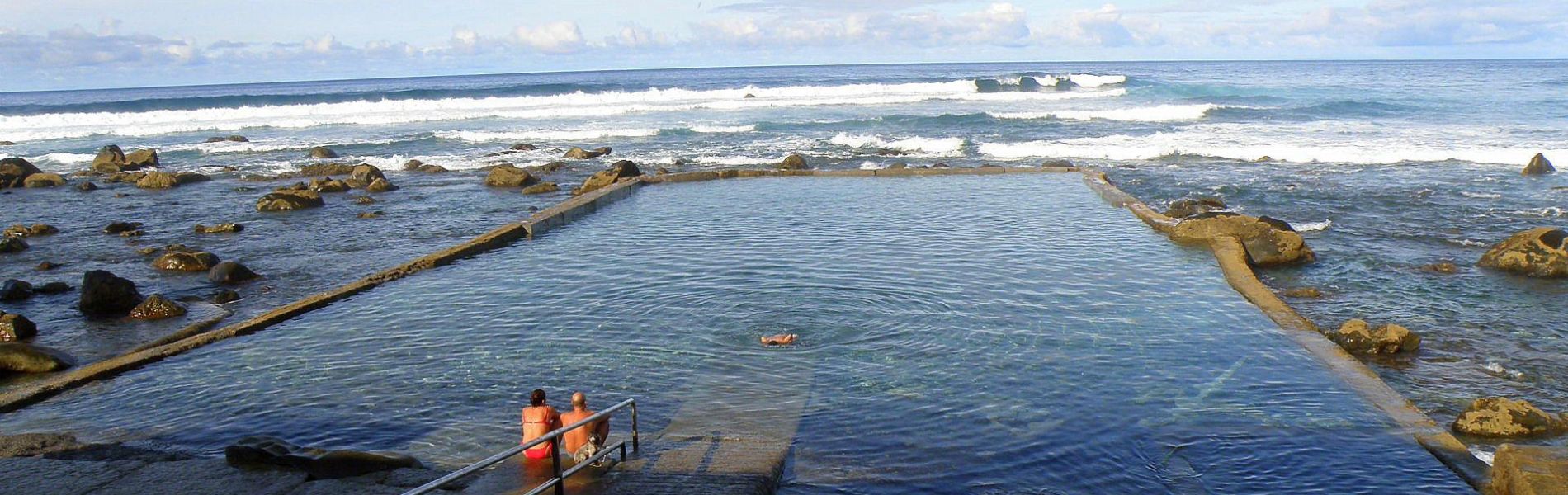
- Bajamar Swimming Pools (San Cristóbal de La Laguna).
Gran Canaria
- Los Charcones (Arucas).
- San Lorenzo Pond (Moya).
- Roque Prieto (Santa María de Guía), up to about 3 m deep.
- Las Salinas (Agaete).
La Gomera, Lanzarote and Fuerteventura
- Charco del Conde (Valle Gran Rey, La Gomera).
- Punta Mujeres (north-east of Lanzarote).
- Aguas Verdes (Betancuria area, Fuerteventura).
Safety: rough seas
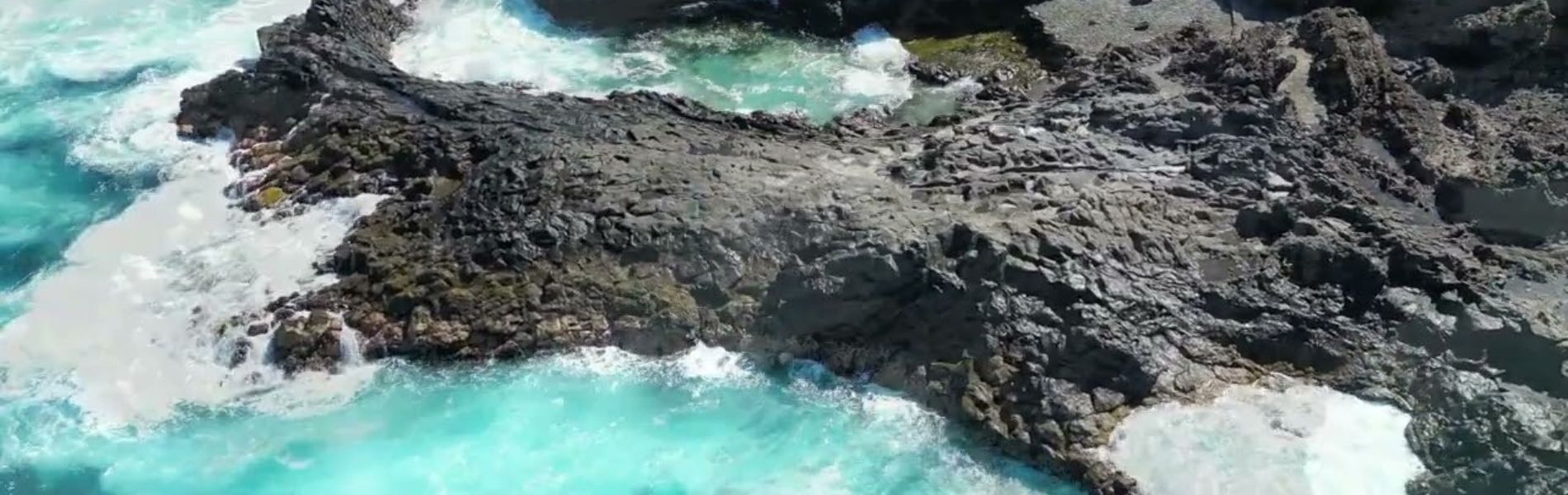
A pool of water can be calm one moment, and the next, a wave can come along and sweep over the rock. That is why:
- Check the sea conditions, tide times and coastal weather warnings issued by the Canary Islands Government and the 112 emergency service before you go.
- Do not enter if the pool is closed or cordoned off, or if there is a pre-alert or alert in place.
- Volcanic rock is slippery and sharp: wear water shoes.
On 7 December 2025, a storm surge at the natural pool on Isla Cangrejo (Los Gigantes, Santiago del Teide) resulted in four deaths. A preliminary warning had been issued regarding coastal phenomena and, according to press reports, the pool was closed.
Excursions and activities near the pools in Tenerife
If you’d prefer to go out to sea with a guide and in safe conditions: And if you’d like to see all the options, here they are: things to do in Tenerife.
Tips for your visit
- Always check the tide: many puddles are only safe at low tide or at mean tide.
- If you see waves breaking on the rocks, don’t go for a swim.
- Wear water shoes and don’t go near the edge of the puddle.
More beaches and things to do in the Canary Islands
 Charco Don Gabino, Tenerife
- El Altillo Natural Swimming Pool, Gran Canaria
- Mesa del Mar Natural Swimming Pool
- The 5 best natural pools in Tenerife
Frequently asked questions
Where is the Charco Azul?
There are two: one in San Andrés y Sauces (La Palma) and another in Frontera (El Hierro).
Is Charco de La Laja in Gran Canaria?
No, it’s in San Juan de la Rambla (Tenerife). The La Laja swimming pools in Las Palmas de Gran Canaria are somewhere else.
When is the best time to have a bath?
It depends on the pool; many are best at low tide or at mid-tide. Check the tide times.
Are there any first-aiders?
There are only a few of these pools. The Charco Azul on La Palma is only open in summer; the one on El Hierro is unsupervised.
Are they dangerous?
If there’s a swell, yes. Don’t go for a swim if there’s a coastal hazard warning or if the swimming area is closed.
